
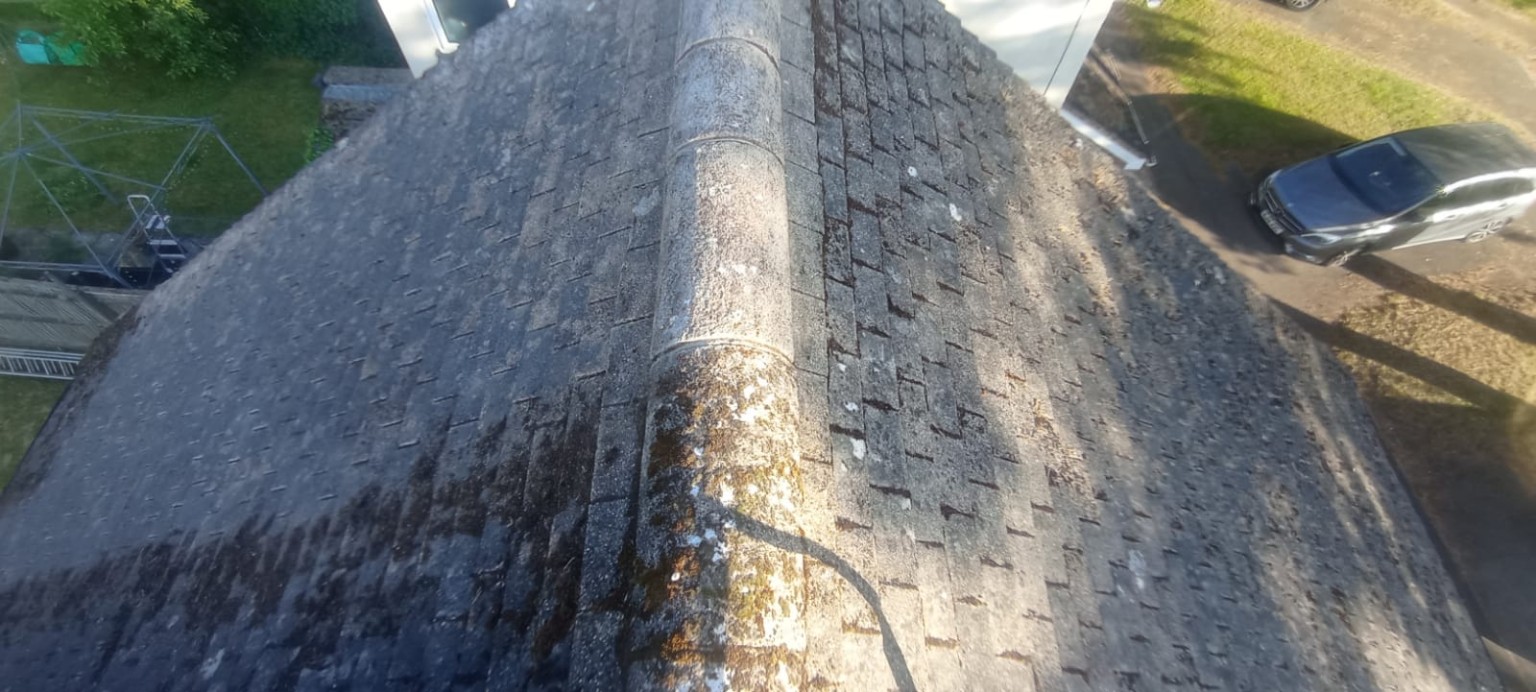
If you’ve ever pulled into your driveway, glanced up at the roof and thought “when on earth did that turn green?” — trust me, you’re not the only one. It’s probably the question we get asked most around Hampshire and Berkshire. So I thought I’d sit down and explain it properly, in plain English, without the sales waffle.
Here’s the short version: British roofs get mossy because Britain is, frankly, a paradise for moss. But there’s a bit more to it than just “it rains a lot” — and once you understand what’s going on up there, it’s a lot easier to keep on top of it.
Our weather does most of the work (sadly)
Moss loves three things: moisture, shade and something rough to cling to. And let’s be honest — the British climate hands it all three on a plate.
We get mild, damp winters and plenty of rain spread right across the year. That means roofs rarely get the chance to fully dry out, especially between October and March. Add in our soft, often overcast light, and you’ve basically built a five-star hotel for moss spores. They drift through the air, land on a damp tile, and settle in for the long haul.
North-facing roofs are the usual suspects
Ever noticed that one side of a roof is green and crusty while the other looks almost spotless? That’s not a coincidence. The north-facing slope gets far less direct sun, so it stays damp for longer. Less sun, more moisture, more moss. Simple as that.
If your home backs onto woodland or sits in a shaded spot — and plenty do around the villages of Tadley, Baughurst and the South Downs — you’ll usually see moss take hold faster than your neighbour two streets over who’s got an open, sunny plot.
Trees, leaves and blocked gutters make it worse
We love a leafy garden as much as anyone, but overhanging trees are a real moss-magnet. They drop leaves and debris onto the roof, which traps moisture and feeds the moss. They also throw shade, which (you guessed it) keeps everything damp.
Blocked gutters are the other big culprit. When water can’t drain properly, it backs up and sits against the lower tiles — and that constant dampness is exactly where moss starts to creep up from the bottom edge of the roof. So if your gutters are full, your roof’s probably suffering too.
Why moss is more than just an eyesore
Now, plenty of people leave moss alone because they think it’s harmless. I get it — it’s “just a bit of green.” But here’s the thing: left long enough, it genuinely starts to cause damage, and that’s where it gets expensive.
Moss holds water against your tiles like a sponge. In winter, that trapped water freezes, expands, and slowly cracks the tile surface — the classic freeze-thaw cycle. Over a few years, that turns small bits of moss into cracked tiles, lifted edges and water finding its way underneath. It also clogs gutters and blocks the natural run-off, which can lead to damp working its way into your walls and loft.
None of this happens overnight. But by the time you spot a damp patch on the bedroom ceiling, the bill is a lot bigger than a simple clean would have been.
So what can you actually do about it?
The good news is that moss is very manageable once you know what you’re dealing with. Here’s what actually helps:
- Keep your gutters clear. A quick annual clear-out stops water backing up against the tiles. It’s the cheapest bit of roof maintenance you can do.
- Cut back overhanging branches. More light and air on the roof means less damp, which means less moss. Even trimming a couple of branches makes a difference.
- Get the moss removed properly — by hand. Not blasted off with a pressure washer (more on that in a second). Hand removal lifts the moss without wrecking the tiles.
- Treat it with a biocide. A proper treatment like BAC50 kills the spores at the root so the moss doesn’t just grow straight back. This is the step most people skip — and it’s the one that makes the clean actually last.
A quick word on pressure washing (please don’t)
I’ll be blunt about this one because it matters. Please don’t let anyone blast your roof with a pressure washer. It looks dramatic and gets quick results, but it strips the protective coating off your tiles, forces water up under them, and in a lot of cases voids your tile manufacturer’s warranty.
We only ever clean roofs by hand and then treat them with BAC50. It takes a bit longer, but your tiles stay intact and the results last far longer. Slow and steady genuinely wins here.
When’s the right time to sort it?
If you can see clear green patches from the ground, your gutters are sprouting their own little gardens, or it’s simply been a good few years since the roof had any attention — it’s worth getting it looked at. Spring and summer are ideal, because the dry weather lets the biocide do its job properly. Not sure whether yours has reached that point? Our guide to the 7 signs your roof needs cleaning walks you through exactly what to look for.
And you don’t need to climb up there yourself to find out. A few photos from the ground (your phone’s zoom is perfect for this) are usually enough for us to tell you what’s going on and roughly what it’ll cost.
Roof looking a bit green?
Send us a few photos on WhatsApp and we’ll give you an honest, no-obligation quote — usually the same day. Manual cleaning, BAC50 treatment, and a 12-month written guarantee on every job. Serving Hampshire & Berkshire.
Leave a Reply