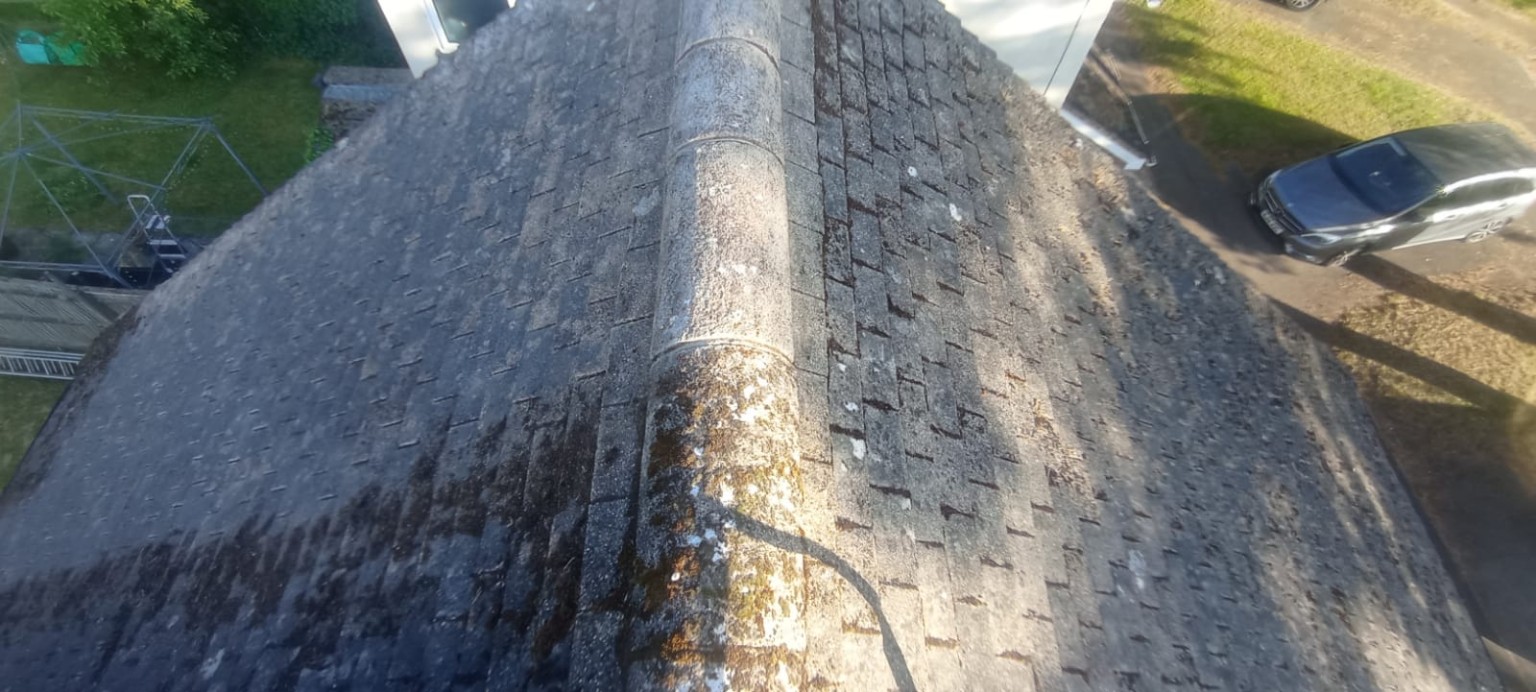
Most homeowners only think about their roof when something goes wrong. However, by then, the damage is often already done — and the repair bill can run into thousands. The truth is, your roof gives clear warning signs long before serious problems develop. Furthermore, spotting them early can save you a fortune.
This guide shows you the 7 signs your roof needs cleaning, what each one means, and what happens if you ignore them. Moreover, you will learn how to do a quick DIY inspection from the ground — no ladder required.
We are PrimeEdge Home Care, a local roof cleaning specialist based in Tadley, Hampshire. So, this guide is built on UK industry best practice and manufacturer guidance from Marley, Redland, and Sandtoft.
Quick Summary: The 7 Warning Signs
- Green or black moss patches on your tiles
- Dark streaks running down the roof
- Crusty white, grey, or yellow patches (lichen)
- Blocked or overflowing gutters
- Tile granules in your gutters or driveway
- Damp patches inside your loft or upper ceilings
- Loose, slipped, or missing tiles
So, if you spot two or more of these signs, your roof needs professional attention. However, do not panic — most of these issues are simple to resolve when caught early. Let’s go through each one in detail.
Sign #1: Green or Black Moss Patches
This is the most obvious sign. (We explain the science behind it in our guide to why British roofs get so much moss.) Moreover, it is also the most common across Hampshire and Berkshire because of the damp UK climate. You will see fuzzy green clumps growing between tiles, usually on the north-facing side of the roof, in shaded areas, or under overhanging trees.
Why It Matters
Moss is not just ugly. Furthermore, it actively damages your roof:
- It traps moisture against your tiles, accelerating freeze-thaw damage in winter
- It blocks water drainage, forcing water sideways and under tile overlaps
- It lifts tiles as it grows, breaking the watertight seal
- It produces acidic compounds that eat into the protective tile coating
What Happens If You Ignore It
Within 2-3 years, moss can cause cracked tiles, water ingress, and damaged ridge mortar. As a result, you may face repair bills of £400-£900 for ridge tiles alone — or much more if leaks reach your loft timbers.
Sign #2: Dark Streaks Running Down the Roof
If your roof has dark vertical streaks — usually black, grey, or dark green — that is algae. Furthermore, the most common type in the UK is called Gloeocapsa magma. It feeds on the limestone filler used in modern roof tiles.
Why It Matters
Although algae looks like just a stain, it actually:
- Reduces your roof’s reflectivity, making your home hotter in summer (and pricier to cool)
- Erodes tile coating over time
- Spreads quickly to neighbouring tiles — and even your neighbour’s roof
- Sets up perfect conditions for moss to follow
What Happens If You Ignore It
Algae alone rarely causes catastrophic damage. However, it is almost always the first stage. Within 1-2 years, untreated algae creates the perfect breeding ground for moss and lichen — which do damage tiles.
Sign #3: Crusty White, Grey, or Yellow Patches (Lichen)
Lichen looks like flat, crusty, circular patches stuck firmly to your tiles. Moreover, it can be white, grey, yellow, orange, or pale green. Unlike moss (which sits on top), lichen actually grows into the surface of the tile.
Why It Matters
Lichen is the most damaging of the three roof growths. Specifically:
- It releases acids that physically dissolve the cement and stone in tiles
- It anchors deep into the tile surface, leaving permanent marks even after removal
- It is extremely slow-growing, meaning if you see lichen, it has likely been there for years
- Pressure washing makes it worse by spreading the spores and exposing fresh damage
What Happens If You Ignore It
Lichen can permanently weaken concrete and clay tiles. Therefore, ignored lichen often leads to tile replacement (£30-£60 per tile) rather than just cleaning. Furthermore, only a professional biocide treatment like BAC50 can kill lichen at the root without damaging tiles.
Sign #4: Blocked or Overflowing Gutters
Walk around your house during the next heavy rain. Then, watch your gutters. If water spills over the front edge — instead of flowing through the downpipe — your gutters are blocked. Often, the cause is moss and debris washed down from a dirty roof.
Why It Matters
- Overflowing water can damage your fascia, soffits, and exterior walls
- Trapped water can freeze in winter, cracking gutters and downpipes
- Constant damp against walls leads to penetrating damp inside
- Pooled water near the foundation can cause subsidence over time
What Happens If You Ignore It
Ignored gutter problems lead to fascia replacement (£500-£1,500 per side), damp walls, and even foundation issues in extreme cases. Therefore, annual gutter clearing is far cheaper than the alternative.
Sign #5: Tile Granules in Your Gutters or Driveway
Modern concrete tiles have a textured granular surface. So, when this surface starts breaking down, you will find small grit-like granules in your gutters, downpipes, or driveway after rain. Furthermore, it often looks like fine gravel or sand.
Why It Matters
Granule loss is a serious warning sign. Specifically, it means:
- The protective tile coating is breaking down
- Tiles are becoming porous — they will absorb water like a sponge
- UV damage and weathering have accelerated
- Often, this follows past pressure washing that stripped the original coating
What Happens If You Ignore It
Without the protective coating, tiles absorb water, freeze in winter, and crack from the inside. As a result, you may need partial or full tile replacement within 3-5 years. Therefore, a proper biocide treatment plus careful manual cleaning can often slow this damage significantly.
Sign #6: Damp Patches Inside Your Loft or Upper Ceilings
Climb into your loft on a dry day and look at the underside of the roof timbers. Furthermore, also check upper-floor ceilings for yellow or brown stains. Even small damp patches indicate that water is finding its way through.
Why It Matters
- Water in the loft rots roof timbers (very expensive to replace)
- Damp insulation loses thermal efficiency and grows mould
- Stained ceilings become a permanent eyesore even after the leak is fixed
- Mould spores can spread through your home, affecting respiratory health
What Happens If You Ignore It
Loft damp is the warning sign you absolutely cannot ignore. So, by the time you see stains inside, water has been getting in for weeks or months. Furthermore, a quick roof inspection now can save thousands in damp treatment, timber replacement, and ceiling repairs later.
Sign #7: Loose, Slipped, or Missing Tiles
This sign is often visible from the ground. Look for tiles that are noticeably out of line, missing entirely, or sitting at a different angle to the rest. Also, after a storm, check the garden and driveway for fallen tile fragments.
Why It Matters
Slipped tiles create gaps in your roof’s defence. As a result:
- Rain enters directly through the gap
- Birds and animals can nest in the loft (creating more damage)
- Wind catches the gap and lifts more tiles in the next storm
- One slipped tile can quickly turn into multiple slipped tiles
What Happens If You Ignore It
Loose tiles are an urgent issue. Furthermore, ignoring them invites water damage, animal infestation, and rapid spread to neighbouring tiles. Therefore, even a single slipped tile should be re-bedded within weeks, not months.
DIY Roof Inspection Checklist (No Ladder Required)
You can spot most of these signs from the ground. So, grab your phone (use the zoom on your camera) or a pair of binoculars, plus a notebook. Then walk around your home using this quick checklist:
- ✅ Stand 20-30 feet from each side of your home
- ✅ Look for visible moss patches (green clumps)
- ✅ Check for dark streaks running down the roof
- ✅ Scan for crusty white/grey/yellow patches
- ✅ Examine ridge tiles — are they all in line, level, and intact?
- ✅ Inspect gutters from the ground (any plant growth visible?)
- ✅ Check driveway and patio for fallen granules or tile pieces
- ✅ Look at fascia and soffit for water stains
- ✅ Inside: check loft and upper ceilings for damp patches
Furthermore, take photos of anything that looks concerning — your phone’s zoom is perfect for capturing detail without leaving the ground. So, if you book a professional inspection later, those photos help spot changes over time. Also, you can send those same photos by WhatsApp to get a free remote assessment.
When to Call a Professional
Some signs need immediate professional attention. Therefore, call a roof cleaner or roofer right away if you see:
- 🚨 Active damp inside the loft or stained ceilings
- 🚨 Multiple slipped or missing tiles
- 🚨 Heavy moss coverage (more than 25% of the roof)
- 🚨 Tile granules appearing regularly after rain
- 🚨 Visible lichen covering large areas
For everything else, a yearly check (every spring or autumn) keeps your roof in great shape. Furthermore, regular maintenance always costs less than emergency repairs. It is also worth understanding why regular roof cleaning extends the life of your roof.
Frequently Asked Questions
How often should I inspect my roof?
For homes across Hampshire and Berkshire, a quick visual inspection every 6 months works well — ideally in spring (after winter damage) and autumn (before winter storms). Furthermore, always inspect after major storms, even briefly.
Can I clean my roof myself?
Light moss removal on a single-storey extension or bungalow is sometimes possible with a soft brush. However, for two-storey homes, the risks of falling outweigh any savings. Moreover, DIY cleaning rarely includes biocide treatment, so moss returns within months. Therefore, professional cleaning with full insurance is the safer option.
Will moss really damage my roof?
Yes. Moreover, the damage is gradual but real. Moss traps moisture, lifts tiles, blocks drainage, and produces acidic compounds that eat into the tile surface. Therefore, untreated moss eventually leads to cracked tiles, damaged ridge mortar, and water ingress.
What is the difference between moss, algae, and lichen?
Moss is fuzzy green clumps that sit on top of tiles. Algae creates dark vertical streaks. Lichen forms crusty, flat patches in white, grey, or yellow. Furthermore, lichen is the most damaging because it grows into the tile surface and releases tile-destroying acids.
Is my home covered by buildings insurance for moss damage?
Most UK buildings insurance policies do NOT cover moss damage. Specifically, insurers treat it as a maintenance issue. Therefore, ignoring obvious warning signs may also invalidate cover for subsequent water damage claims. So, regular cleaning protects your insurance too.
Should I worry about lichen even if my tiles look okay?
Yes. Furthermore, lichen damage is mostly invisible from the ground. It works slowly but permanently. Therefore, if you see crusty patches, book a professional inspection. A BAC50 biocide treatment can stop further damage before it requires tile replacement.
The Bottom Line
Your roof talks to you. However, you have to know how to listen. So, by spotting these 7 warning signs early, you can prevent expensive repairs, extend your roof’s life by years, and protect your home’s value.
Furthermore, the earlier you act, the cheaper the solution. For example, a roof with light moss takes one short visit to clean and treat. In contrast, the same roof ignored for 3 years may need ridge tile repairs, tile replacement, and damp treatment — costing 5-10x more.
If you spotted two or more warning signs while reading this, do not wait. Book a free roof inspection today — it costs you nothing, and we will send you a full report with photos.
Get a Free Roof Health Check
Spotted any of these signs? Send us 3-4 photos of your roof by WhatsApp. Furthermore, we will respond the same day with an honest assessment — no obligation, no hard sell. Also, if your roof needs work, every job comes with our 12-month written guarantee.
PrimeEdge Home Care is a fully insured, Companies House-registered roof cleaning specialist based in Tadley, Hampshire. We serve homeowners across Hampshire and Berkshire including Basingstoke, Reading, Newbury, Fleet, and Andover. Furthermore, every job comes with a 12-month written guarantee and a complete before-and-after photo report.